Copper wire is the ultimate part of electrical conductivity which enlightens every corner of the world. Copper wire is an essential player in various industries. With such technological advancement, reliance on actual copper wire manufacturers becomes imperative. Producing certified and high-quality copper wires ensures that our electrical systems are reliable and efficient.
Whenever you flick the switch or place your electrical device charge, remember the importance of copper wire behind all this. We will study copper wire in this blog, including its definition, types, and uses. So let’s get right to it and break it down.
What is copper wire?
Copper wire is a conductive metal wiring that uses copper, a non-precious material with remarkable electrical and thermal properties. The first use dates back to the early years of the telegraph and electromagnet, but its relevance was significantly increased with the introduction of the telephone. Since then, copper wire has been central to power generation, telecommunications, electronic circuitry and countless other uses.
Due to so many benefits of copper wires, the use of this wires has been increased in various applications, such as electrical wiring in homes, power distribution systems, electronic devices, and much more.
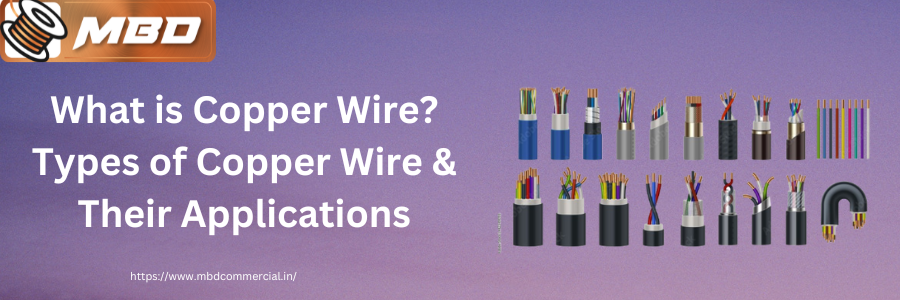
Types of copper wire and their applications
Do you know? Various types of copper wires are used for lighting your home to power the electric appliance. Some devices include bare copper wires and some include insulated copper wires! So taking note of this, let’s explore the types of copper wire and their applications.
- Bare Copper Wires: As the name suggests bare wire means there is no protective or insulation layer on copper wire. To maintain the raw conductivity of the copper, it is essential to keep the copper conductor bare.
Applications: These copper wires are mostly used to set up grounding electrical systems, electrical installations and crafting of conductive elements. - Insulated Copper Wires: One kind of wires with an insulating layer covering it is called insulated copper wire. This insulated coat helps to protect against external elements and prevent electrical leakage.
Applications: Insulated copper wires plays a crucial role in building wiring. It is also used majorly to distribute power effectively. - Twisted Pair Copper Wires: In order to lessen electromagnetic induction, two insulated wires are twisted around one another in this type of copper wires. The first wire is used to receive signals, and the other wire is referenced to ground.
Applications: These twisted copper wires have a significant role in easing the connection between computers & telecom companies. Additionally, these wire types are used for audio/video and data transmission (Ethernet cables). - Coaxial Copper Wires: Coaxial copper wire has a metallic protective layer, an insulating layer outside and a conductor in the center of the wire. This design of copper wire helps to ease the transmission & receive the signal without loss.
Applications: Coaxial copper wire is majorly used in cable television, Internet connections and CCTV systems. - Magnet Wire (Winding Wire): Winding wire, another name for magnet wire, has a thin layer of insulation surrounding the conductor. This thin layer typically is made up of Polyurethane with a polyamide overcoat and protects the coiled wire from short-circuiting.
Applications: The wire is commonly used in electric motor winding, transformer manufacturing and Inductor construction. - Enamelled Copper Wire: Enamelled copper wires is covered with a thin layer of insulation made of polymer film. This type of wire is ideal for applications requiring a compact winding with minimal insulation thickness.
Applications: Enamelled copper wire is a primary element used in intricate motor working systems. Also, small transformers and speakers coil including enameled copper wiring. - Tinned Copper Wire: Tinned copper wire is an uninsulated wires covered with a tin layer. This coated tin layer prevents the corrosion of wire and adds solderability. The layer of tin around the wire keeps the current flow smooth by ignoring the rust and worse climate change.
Applications: This type of wire is mostly used in Marine and automotive wiring including, electronic circuitry and networking Industrial equipment. - Heavy-Duty Power Cable: Heavy-duty power cables are used, as the name implies. Sheathing and insulation for heavy-duty power cables are made of stronger, thicker materials. The primary purpose of these cables is to transport high voltages and currents.
Applications: When running heavy industrial machinery with your electric devices, heavy-duty power cables are a more dependable choice. They are perfect for outdoor applications where they are subjected to weather conditions and possible physical damage because of their sturdy construction. - Busbar Wire: Busbar wires are simply made of metallic strips or bars. These bars are rigid, flat and wider than cable wire but shorter in height. Busbar wires can carry more current than cable wires due to ground conductivity. Busbar wire is used widely to transfer the details with equipment due a its good conductivity and flexibility.
Applications: Busbar wires are used for power distribution with flexibility and greater ease. Also, these wires help to network electrical substations and run Industrial power systems smoothly.
Conclusion:
The role of copper in electrical transmission encompasses solid wires at home to sophisticated cables enabling energy distribution within industrial machines. This rare blend of characteristics, including high conductivity and other properties like flexibility and corrosion resistance, makes copper ideal for many applications.
Frequently Asked Questions–
However, copper wires is mainly used for electrical transmission as it has high conductivity. It is primarily used under multiple domains, such as power distribution, telecommunication & electronic circuits.
Copper is the non precious metal with the highest electrical conductivity among the others. It performs better than other alternatives, such as aluminum, in applications requiring high conductivity.
The copper wires are conductive metal rods containing metal Copper due to their high electrical and thermodynamic characteristics. It is a functioning element to power systems and telecommunication as well as electronic units that ensure optimized conduction of electric current.
Connections may then be formed by soldering copper wires. This aspect makes establishing electrical junctions for both the transmission and termination points easier.